Weighted Jump-Rope
NewThe Weighted Jump-Rope mainly works the calves / shins, with help from the shoulders and forearms. You'll need: jump rope.

Required Equipment

Weighted Jump-Rope Muscles Worked
Primary
Upper Calf (gastrocnemius); Lower Calf (soleus)
Secondary
Front Shoulder (anterior deltoid); Side Shoulder (lateral deltoid); Inner Forearm (wrist flexors); Top Forearm (wrist extensors)
Weighted Jump-Rope Variations and Alternatives


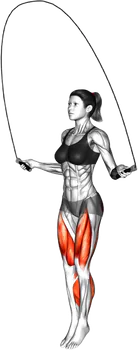

How to do the Weighted Jump-Rope
Setup
Size the rope by standing on the middle of the cord with one foot. The handles should reach just under your armpits.
Hold a handle in each hand at hip height with your elbows tucked in to your ribs and the rope resting behind your heels.
Stand tall with your feet together and your knees slightly bent.
Movement
Swing the rope over your head by turning your wrists and forearms. Keep your shoulders braced, because the heavier cord pulls on them with every turn.
Hop just high enough for the rope to pass under your feet, an inch or two, and land softly on the balls of your feet.
Let the rope set the pace. A weighted rope turns slower than a speed rope, so find a steady rhythm and hold it.
Keep your chest up and your core tight for the whole set.
Tips
Your forearms and shoulders will usually tire before your calves do. If the rope starts to drag or catch, end the round and rest.
Start with shorter rounds than you would on a regular rope, around 30 to 60 seconds, and build from there.
Jump on a surface with some give, like a gym floor or a mat, rather than concrete.
Weighted Jump-Rope FAQs
What muscles does the Weighted Jump-Rope work?
The Weighted Jump-Rope mainly works the calves / shins, with help from the shoulders and forearms. The main muscles are the gastrocnemius and soleus.
What equipment do you need for the Weighted Jump-Rope?
Jump rope.
What are some Weighted Jump-Rope variations and alternatives?
Similar exercises include the Jump-Rope, Jump-Rope High, Jump-Rope Side-To-Side and Jump-Rope Double Under.
Training calculators
Work out the numbers behind your training before your next session.